
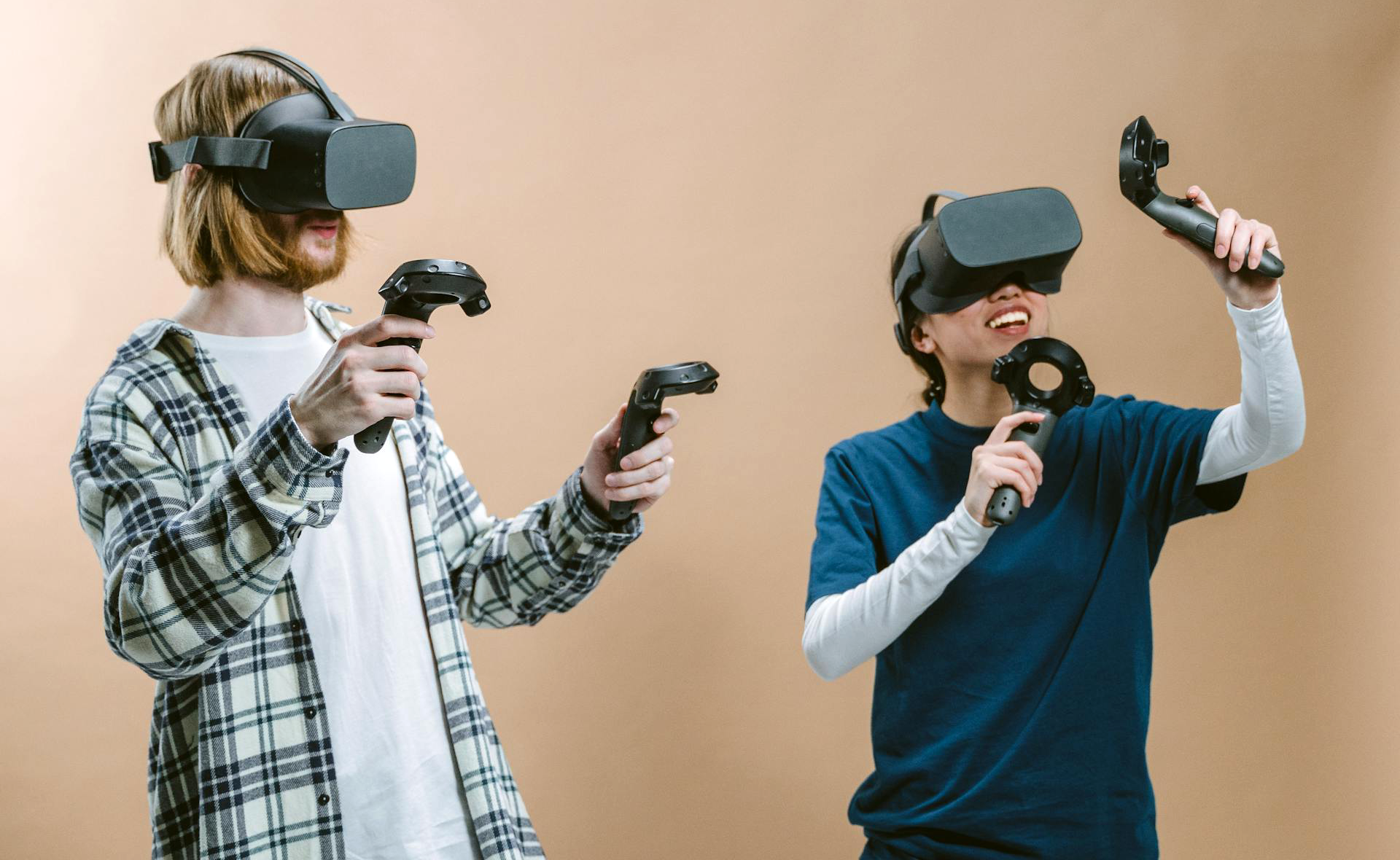
Spending more time in virtual and augmented reality sports games may do more than pass the time. A study published last year, Exploring the Social Dimensions of Virtual/Augmented Reality Sport Gaming: Interplay Among Game Involvement, Interpersonal Relationships, Social Capital, and Psychological Well-Being, found that players who stay more engaged in these immersive environments tend to build stronger relationships and report better overall mental well-being.
The research looked at how four areas connect: how involved players are in the game, how they interact with others, the social networks they build, and how they feel mentally. What stood out is how closely those pieces are tied together. Players who were more engaged didn’t just play longer; they communicated more, joined group activities, and stayed connected with others beyond individual sessions.
That level of involvement had a ripple effect. As interaction increased, so did relationship strength. Those stronger relationships contributed to higher levels of social capital, which refers to the support, trust, and shared experiences people gain from being part of a network. In turn, that social capital was linked to better psychological well-being.
The study breaks this down. Engagement leads to interaction, and interaction builds relationships. Those relationships create a sense of community and support, and that support then plays a role in improving how people feel day-to-day.
Another point the researchers examined was how direct and indirect effects work together. Game involvement didn’t just improve well-being on its own. Much of its impact came through relationships and social capital. In other words, it is not just the game itself; it is the connections formed through it that make the biggest difference.
The immersive nature of VR and AR helps explain why this happens. These environments create a stronger sense of presence, making players feel like they are sharing the same space. That can make conversations feel more natural and teamwork more engaging. Compared to traditional gaming, where interaction is often limited to screens and chat boxes, VR and AR bring a more physical and social feel to the experience.
The study also points out that not every gaming experience leads to the same outcome. Games that encourage communication, cooperation, and repeated interaction tend to build stronger social connections. Features like voice chat, team-based objectives, and shared goals help reinforce those relationships over time.
Researchers also considered the long-term potential of these platforms. As VR and AR technology become more common, these environments may continue to grow as social spaces, not just gaming environments. That could be especially important for people looking for connection, whether due to distance, work schedules, or other barriers that make in-person interaction harder.
At the same time, the study says that more long-term research is needed. While the findings show clear connections among gaming, relationships, and well-being, it remains unclear how long those effects last and how they may change as technology evolves.
Even with that uncertainty, the findings add to a growing body of research showing that immersive gaming can play a meaningful role in people’s lives. For many players, VR and AR sports games are becoming a place to connect, build relationships, and maintain a sense of community that extends beyond the game itself.





0 Comments