
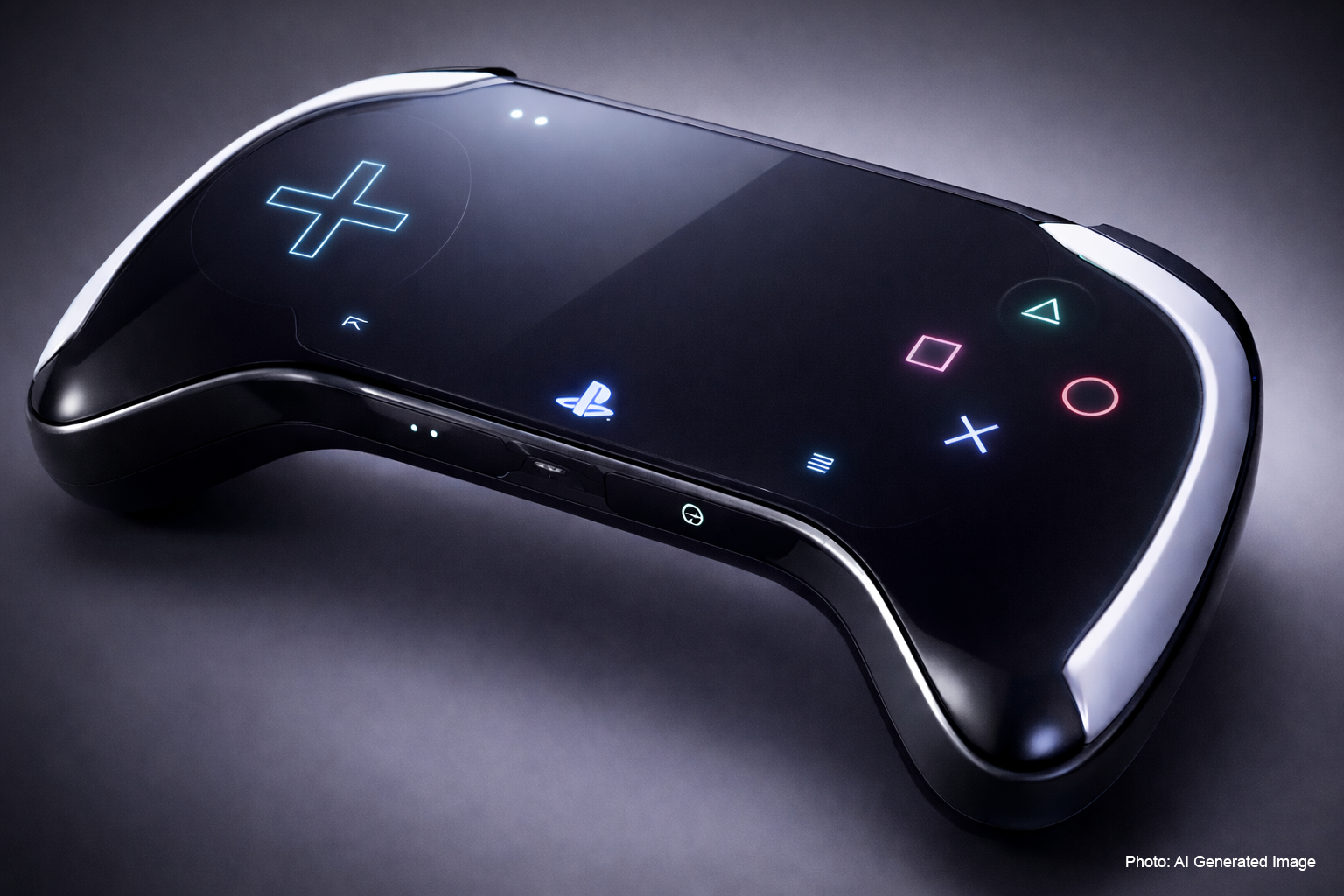
Sony Interactive Entertainment has filed a recent patent describing a touch-based game controller that removes traditional physical buttons altogether. The filing is a glimpse at how players might interact with future PlayStation hardware, including the PlayStation 6. While the filing does not confirm that the controller will ever reach the market, it outlines ideas Sony is actively exploring as it looks ahead to the next generation of gaming.
According to the patent, the controller would rely on touch-sensitive surfaces instead of physical buttons or analog sticks. These surfaces could register a wide range of inputs such as taps, presses, swipes, and directional movement similar to a joystick. Sony’s design incorporates capacitive touch sensors, optical tracking, and pressure detection to interpret player intent while filtering out accidental contact from resting fingers, a common concern with touch-driven controls.
Customization plays a central role in the concept. The patent explains that players could rearrange virtual buttons, change their size, or remove them entirely, depending on the game or personal preference. Control layouts could be saved as individual profiles and loaded automatically, allowing different users to maintain their own setups. This flexibility could appeal to players who want more control over how they interact with games across genres like shooters, fighting games, or role-playing titles.
Sony also addresses comfort and accessibility in the filing. Fixed controller layouts may not work equally well for every player, particularly those with limited mobility. A fully touch-based interface could allow users to tailor controls to their physical needs, potentially making games more accessible without requiring additional hardware. This aligns with Sony’s recent efforts to expand accessibility options across its platforms.
Beyond comfort, the patent suggests new possibilities for gameplay design. Developers could create context-sensitive controls that change during play, gesture-based interactions, or interfaces that adapt to specific moments in a game. These ideas could lead to new experiences, but they would also challenge long-established control standards that players have relied on for decades.
As with many patent filings, there is no confirmation that this controller is intended specifically for the PlayStation 6 or that it will ever be manufactured. Companies often file patents to protect experimental ideas or future research, and many concepts never progress beyond the documentation stage. Industry observers regularly caution against treating patents as product announcements.
Even so, the filing fits within Sony’s long history of controller experimentation. From the original DualShock to the DualSense controller, featuring haptic feedback and adaptive triggers, Sony has consistently explored new ways to enhance player interaction. Whether a buttonless controller becomes part of the next console generation or remains a concept, the patent shows Sony continuing to rethink how players connect with games.









0 Comments